How to Automate Lead Follow-Ups (Without Losing the Human Touch)
February 17, 2026
If your website gets traffic but no inquiries, something is broken. Here are the 7 most common reasons your website fails to generate leads and practical fixes for each.
Loic Bachellerie
February 3, 2026

You have a website. It looks decent. You might even be getting some traffic. But the phone is not ringing, the contact form sits empty, and your inbox is free of new inquiries. Sound familiar?
You are not alone. Most business websites fail at the one thing they are supposed to do: generate leads. The gap between a website that exists and a website that performs is enormous, and it usually comes down to a handful of fixable problems.
Here are seven reasons your website is not generating leads, and exactly what you can do about each one.
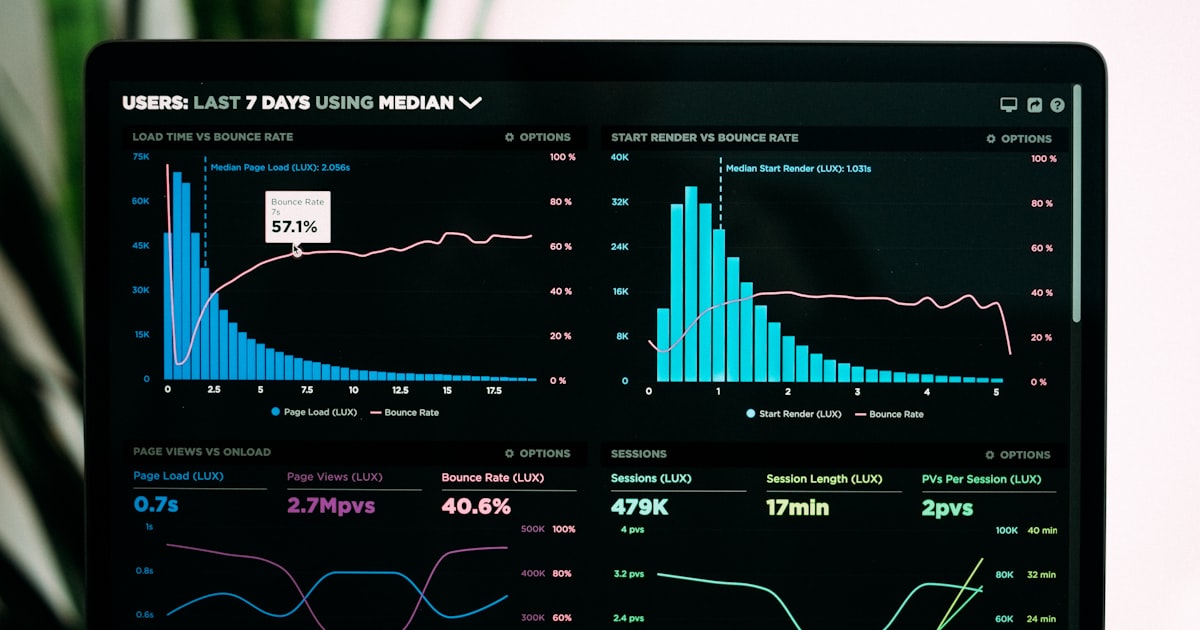
This is the silent killer of conversions. According to Google, 53 percent of mobile visitors abandon a page that takes longer than three seconds to load. Three seconds. That is all the patience your potential customers have.
Slow websites do not just frustrate visitors. They also hurt your search rankings. Google has used page speed as a ranking factor for years, and with Core Web Vitals now a significant part of the algorithm, a slow site gets pushed down in search results, meaning fewer people find you in the first place.
A performance-obsessed approach to web design is not optional in 2026. It is the foundation everything else is built on.
If a visitor lands on your website and does not immediately understand what you want them to do next, you have lost them. Many business websites make the mistake of presenting information without directing visitors toward a specific action.
A call-to-action is not just a button that says "Contact Us" buried in the footer. It is a clear, compelling prompt that tells visitors exactly what they will get and why they should take the next step.
Every page on your website should have a purpose, and every purpose should have a corresponding call-to-action.
Mobile traffic accounts for roughly 60 percent of all web traffic in Canada. If your website does not work flawlessly on a phone, you are ignoring the majority of your potential audience.
A poor mobile experience goes beyond just a layout that does not fit the screen. It includes buttons that are too small to tap, text that requires pinching and zooming, forms that are painful to fill out, and navigation menus that are confusing or broken.
If people cannot find your website, it does not matter how well it converts. Search engine optimization is the long-term engine that drives consistent, qualified traffic to your site.
Many business websites are built with little to no consideration for SEO. They lack proper heading structure, have thin or duplicate content, missing meta descriptions, no internal linking strategy, and poor technical foundations.
SEO is not a one-time task. It is an ongoing practice that compounds over time.
People buy from businesses they trust. If your website does not actively build trust, visitors will leave and find a competitor whose site does.
Trust signals are the elements on your website that tell visitors you are legitimate, credible, and good at what you do. Without them, even interested visitors hesitate to reach out.
Trust is not something you earn after the first contact. It is something your website needs to establish before that contact ever happens.
If visitors cannot find what they are looking for within a few seconds, they leave. Confusing navigation is one of the fastest ways to lose potential leads.
Common navigation mistakes include too many menu items, unclear labels, deeply nested pages, inconsistent placement, and dropdown menus that are difficult to use on mobile.
Good navigation is invisible. Visitors should be able to find what they need without thinking about it.
Here is a scenario that plays out every day: a visitor fills out your contact form, and then nothing happens for hours or even days. By the time you respond, they have already contacted a competitor and moved on.
Speed of response is one of the strongest predictors of whether a lead converts. Research from Harvard Business Review found that companies that responded to inquiries within an hour were nearly seven times more likely to have a meaningful conversation with a decision maker compared to those that waited even sixty minutes longer.
Your website's job does not end when someone fills out a form. The handoff from website to sales process needs to be seamless and fast.
The difference between a website that generates leads and one that does not often comes down to intention. Websites that convert are built with a clear understanding of who the visitor is, what they need, and what action you want them to take. Every design decision, every piece of copy, every technical choice is made with that goal in mind.
Websites that fail to generate leads are typically built to look good or to check a box. They exist, but they do not perform.
If you recognized your website in several of the issues above, the good news is that every single one of them is fixable. Some require design and development work. Others are content and strategy changes you can start implementing today.
At WebLaunch, we build websites with one goal: growth. Every site we create is custom-coded for performance, designed for conversion, and built to generate real business results. No templates. No page builders. No compromises.
If your website is not pulling its weight, let us show you what a performance-driven site can do for your business.
Book a free strategy call and let us audit your current site and map out a plan to turn it into your best salesperson.
Let's discuss how we can help you achieve your goals online.