
How to Automate Lead Follow-Ups (Without Losing the Human Touch)
February 17, 2026
Your website gets traffic but not enough leads or sales? Here are 10 proven, data-backed strategies to improve your website conversion rate and turn more visitors into customers.
Loic Bachellerie
January 6, 2026
Getting traffic to your website is only half the battle. The real challenge, and where most businesses fall short, is turning that traffic into leads, customers, and revenue. That is what conversion rate optimization is all about.
The average website conversion rate across industries hovers around 2 to 3 percent. That means 97 out of every 100 visitors leave without taking action. Even small improvements to your conversion rate can have an outsized impact on your bottom line. Moving from 2 percent to 4 percent does not sound dramatic, but it means doubling your leads or sales from the same amount of traffic.
Here are ten proven strategies to improve your website conversion rate, backed by data and practical enough to implement right away.
Page speed is the foundation of conversion. If your website is slow, nothing else on this list matters because visitors will leave before they see any of it.
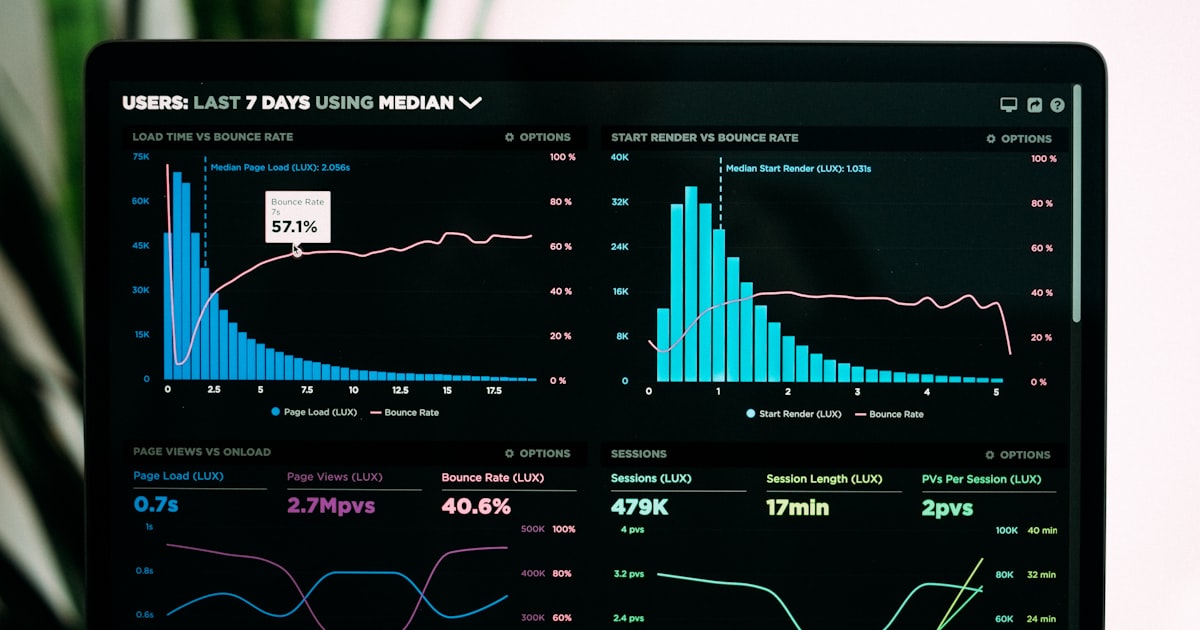
Google research shows that as page load time increases from one to three seconds, the probability of bounce increases by 32 percent. At five seconds, it jumps to 90 percent. Walmart found that for every one-second improvement in load time, conversions increased by 2 percent.
A custom-coded website built on a modern framework will outperform a template-based site almost every time because there is no bloated code dragging it down. Performance-first web design is one of the most impactful investments you can make.
When someone lands on your website, they should understand within five seconds what you do, who you do it for, and why they should care. If your value proposition is vague, generic, or buried below the fold, visitors will not stick around to figure it out.
Research from the Nielsen Norman Group indicates that most users leave a web page within 10 to 20 seconds. But pages with a clear value proposition can hold attention significantly longer.
Your homepage headline is arguably the single most important piece of copy on your entire website. Invest time in getting it right.
People look to others when making decisions. Social proof, in the form of testimonials, reviews, case studies, and client logos, reduces the perceived risk of doing business with you and builds the confidence visitors need to take action.
According to BrightLocal research, 87 percent of consumers read online reviews for local businesses. And a study by Spiegel Research Center found that displaying reviews can increase conversion rates by up to 270 percent.
Social proof should not be confined to one section. Weave it throughout the pages where visitors are making decisions.
A call-to-action that requires scrolling to find is a call-to-action that many visitors will never see. Data consistently shows that content above the fold receives significantly more engagement than content below it.
Research from the Nielsen Norman Group found that users spend 57 percent of their page-viewing time above the fold and 74 percent within the first two screenfuls. Your most important conversion elements need to live where attention is highest.
Do not assume visitors will scroll down to find your call-to-action. Make it impossible to miss.
Mobile devices account for approximately 60 percent of web traffic globally. If your mobile conversion rate is significantly lower than desktop, you are leaving money on the table.
Google's research found that 61 percent of users are unlikely to return to a mobile site they had trouble accessing, and 40 percent visit a competitor's site instead. The mobile experience is not secondary. For many of your visitors, it is the only experience.
For e-commerce sites, mobile optimization is especially critical. A clunky mobile checkout process is the fastest way to kill your conversion rate.
Guessing what works is expensive. A/B testing lets you make data-driven decisions by comparing two versions of a page element to see which performs better.
Even small changes can produce significant results. Changing a button color, rewriting a headline, or moving a form can lead to measurable improvements in conversion rates. But you need actual data, not opinions, to know what works for your specific audience.
A/B testing is not a one-time activity. The most effective websites are continuously testing and improving.
Online trust is fragile. Visitors need reassurance that their information is safe, your business is legitimate, and doing business with you carries minimal risk. Trust badges and security indicators provide that reassurance.
A study by Baymard Institute found that 18 percent of users abandoned a checkout process because they did not trust the site with their credit card information. For non-e-commerce sites, the principle still applies. Visitors need to feel safe before sharing their contact information.
Trust badges work best when placed near the point of conversion, right next to the form or checkout button where visitors are making their decision.
Every additional field in a form increases the friction for the visitor and decreases the likelihood they will complete it. Research consistently shows that shorter forms convert better.
HubSpot found that reducing form fields from four to three increased conversions by nearly 50 percent. Imagescape increased their conversion rate by 120 percent by reducing their form from eleven fields to four.
The goal of your contact form is to start a conversation, not to qualify the lead completely before you have even spoken to them. Gather the minimum information needed and follow up personally for the rest.
Not every visitor is ready to fill out a form or make a phone call. Live chat provides an intermediate step that captures visitors who have questions but are not yet committed enough to submit a formal inquiry.
Research from Kayako found that 79 percent of businesses said offering live chat had a positive effect on sales, revenue, and customer loyalty. Forrester Research found that customers who engage in chat are 2.8 times more likely to convert.
Live chat works best when it feels like a genuine conversation rather than a scripted sales pitch. Train your team to be helpful first and selling second.
Personalization means delivering different content, offers, or experiences based on who the visitor is and what they have done. It transforms your website from a one-size-fits-all brochure into a dynamic experience that adapts to each visitor.
According to McKinsey, 71 percent of consumers expect companies to deliver personalized interactions, and 76 percent get frustrated when this does not happen. Epsilon research found that 80 percent of consumers are more likely to make a purchase when brands offer personalized experiences.
Personalization does not have to be complex. Even simple adjustments like greeting returning visitors differently or showing location-specific content can improve conversion rates.
No single tactic on this list will transform your conversion rate overnight. The most effective approach is to implement multiple strategies simultaneously and continue refining based on data.
Start with the fundamentals: page speed, clear value proposition, and prominent CTAs. These three elements alone account for the majority of conversion issues on most websites. From there, layer in social proof, mobile optimization, and form simplification.
The compounding effect of multiple small improvements is powerful. A 10 percent improvement in page speed, a 10 percent improvement from better CTAs, and a 10 percent improvement from social proof do not add up to 30 percent. They multiply, creating gains that far exceed what any single change could achieve.
You cannot improve what you do not measure. Set up proper tracking before implementing any changes:
Google Analytics, combined with heatmap tools like Hotjar or Microsoft Clarity, gives you a comprehensive view of how visitors interact with your site and where they drop off.
At WebLaunch, conversion optimization is built into everything we do. We do not just build beautiful websites. We build websites that are engineered to turn visitors into customers. Every design decision, every line of code, every piece of content is created with your conversion goals in mind.
If your website is getting traffic but not generating the leads or sales it should, we can help.
Book a free strategy call and let us identify the biggest conversion opportunities on your site and build a plan to capture them.
Let's discuss how we can help you achieve your goals online.